Photo by AJ Garcia on MiDignidad.com

Title: Animal Names
Content Area: English & Animals Grade Level: 4th-5th Language Level(s): Nebraska English Language Proficiency Standards Addressed: ELP 4-5.1.L2 Nebraska State Content Standards Addressed: LA.4.F.3.b LA.3.W.5.d
Topic of the Lesson & Rationale (Why is this important?): Students review their ABCs and make the connection between letters and names. |
Assets my MLs bring to the class: How I will make connections to their home languages and cultures, backgrounds and/or prior learning. Students can explain the significance of their name and the background of their language. We can point out cognates with similar-sounding words that begin with the same letter.
Materials Needed: Remember to incorporate texts and materials that build on students’ culture and language to support and promote both language development and academic achievement.
|
Objectives(s) Content Objective: SWBAT write one complete sentence, with the help of sentence frames, and justify their adjective to fit their personality with 100% completion. Language Objective: SWBAT to identify an animal that starts with the same letter as their name, with the help of an anchor chart, giving a minimum of 2 examples. Cultural Objective: SWBAT pronounce their name and explain how they like to be called and explain its significance to their culture. |
Vocabulary
|
ESL Strategies Used:
|
Questions: (1-on-1)
|
Anticipatory Set I always ask how their week is going, any weekend plans, and how they're feeling. Sometimes have them stand and stretch depending on mood and moment.
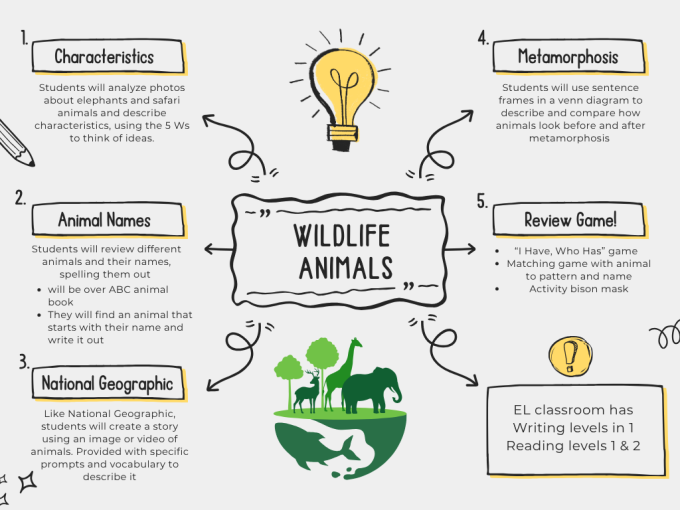
Introduce them to sea creatures and animals. “Raise your hand if you’ve heard of the zoo. Who’s been to a zoo?” What’s an aquarium?
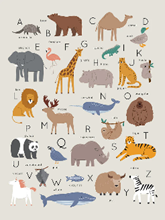
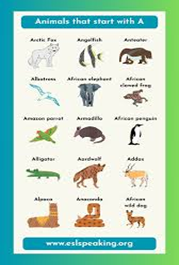
After students have shared, I will go over some of the vocabulary and animals seen in the book to introduce them to different animals. I will point out that each animal's name is capitalized to show the letter they start with.
Explain our objectives and what we will be going over: read a book, create a sentence similar using our name and an animal that starts with the same letter.
|
Beginning of Lesson: I Do/We Do State the book title and have students turn and talk about what animal they see on the front cover.
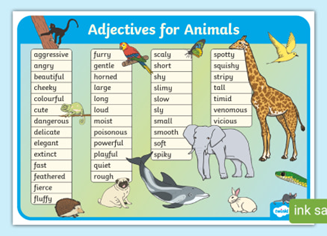
Depending the level in reading, I can read-aloud, echo-read, or students read on their own. If we echo-read (for level 2), they repeat after me throughout the entire book. Stop throughout the book to ask questions and make connections with the letters and rhyming. Some fun images can be pointed out about the animals, like the weird umbrellamouth. Also, point out adjectives that they may not know and explain, like slumber, which means sleep.
Once finished, ask if they had a favorite animal shown or if one was interesting. This can also be a time to look at real images of the animals and show the students if they’re really intrigued, or have them point out other animals that are similar they’ve seen.
|
Middle of Lesson: You Do It Together
We will then work together, and I will first fill in the sentence frame on the whiteboard. |
End of the Lesson: You Do It Alone The student will then copy and write their complete sentence in their journal. If a level 1, I will write their chosen words for them to copy; if intermediate, they can sound them out and work on their own with observation. They will then read it aloud when finished.
|
Assessment Statement:
|
Closure: Praise them for all their work. Good job in writing their sentence and reviewing their ABCs with some fun animal names. Next time, we will describe our animals using adjectives and create a story. |